Friday, August 26, 2022

Women We Love: Bonnie Trompeter Lowe


"Take a picture. It'll last longer." How true. Sixteen photographs in an old Life magazine have stayed with me for the past 64 years. 


In 1958, when I was 16 and sure I would never have a date let alone a boyfriend, I bought an issue of Life magazine at the Summit Hotel in Uniontown, Pennsylvania. My mother and I were on a week's vacation at this rambling old resort in southwestern Pennsylvania. The pretty young woman on the cover is enjoying a sailboat ride. Inside, 14-year-old Bonnie Trompeter is discovering "the fun of being pretty" in a seven-page story. Well, at least someone is enjoying their teenage years, I thought.


Though the braces were off and the acne pretty much cleared up, I wasn't leading anything like the carefree teenage life I'd imagined I would. Bonnie seemed to be. I was happy for her and maybe a bit jealous.  


That was the week I met Carole, another guest at the resort. We discovered we went to the same high school and lived only a few blocks away. She was pretty, confident and friends with all the local kids who worked at the Summit. With her, everything changed. It was "American Graffiti" 15 years before the movie and the best week of my life. We are friends to this day.


That magazine and week have remained inexorably entwined. I don't think of one without remembering the other. But this is a story about the girl in those pictures. A fluke Facebook post has connected us, and she agreed to share the story of her most remarkable life. 

Bonnie Trompeter Lowe

Bonnie was growing up the eldest of two daughters in Larchmont, New York, 25 miles from New York City. She was studious, but shy, and felt awkward as she was so tall. She must have been a beautiful child but says she was never treated as special. Her parents were strict; she wasn't even allowed to date.

She was surprised when her mother suggested they visit the Conover agency in NYC to see if she had model potential. A writer and photographer from Life happened to be at the agency that day. They'd been searching nationwide for a teenage girl to feature in a picture story and had come up short. Bonnie feels sure they were just weary of looking so she was "it". I have a feeling they knew they'd found someone special.

The pair from Life moved up to Larchmont and spent a month following Bonnie everywhere, even to school. Life was the most popular magazine in the country. The Trompeters were told if there weren't a war or some other disaster that week, Bonnie would be the cover story. She was.

Life was an oversized picture weekly and used many well known photographers. The photographer given the assignment, Paul Schutzer, became noted for his work in Vietnam and died in 1967 photographing the Israeli Six-Day War. Strictly reportage, no photos in Bonnie's story were ever set up or posed. They capture a fairly typical, late 1950's suburban family. Her father was "a food store manager" as reported by Life. Her mother was a stay-at-home mom who made sure Bonnie was educated in the social graces, including both ballet and piano lessons. She urged her to "be somebody", but Bonnie was interested in being a good student and navigating junior high school life.

These photos of Bonnie, with her family and friends are so compelling you sense this lovely, still unsophisticated young woman is about to discover what we can see already: her good looks and inherent charm will take her a long way.

Although she says there wasn't much fanfare around town after publication, the story in Life became her "portfolio" and quickly got her a first modelling assignment—the cover of Seventeen for January 1959 shot by the notable Francesco Scavullo. 

First assignment, January 1959

She took to modeling naturally and though barely 14 was commuting regularly to New York City on assignments. This was a time before girls Bonnie's age were actually used to model teen fashions. With the exception of Carol Lynley and Sandra Dee, who quickly went on to acting careers, most teen models were in their early '20s at the youngest.

Bonnie convinced her parents to let her enroll in and commute to The Professional Children's School in Manhattan for high school. PCS is a college prep academy near Lincoln Center for working young professionals in the arts and show business. Among her classmates were Christopher Walken, then known as Ronnie and performing as a dancer, and actor Brandon de Wilde. He became an early boyfriend until he went off to Hollywood and met Carol Lynley on the set of "Blue Denim". Bonnie was barely in class, studying on the go as she fulfilled an ever increasing slate of work assignments.

PCS yearbook roommates

In fact, at age 14 she went off to London for the British publication Woman as well as being sent to Paris, also alone, to work for Marie Claire and Jardin des Modes. Bonnie said she was so terrified of Paris she spent the first two days in her hotel room before she had the courage to venture out.

Working girl, 1962

She finished high school in three years and enrolled as an English major at Middlebury College in Vermont. Although MGM sent her to acting school and gave her a screen test with the young James Caan, her heart wasn't in it. College was something she really wanted. You can certainly see why they were interested. In this picture from Life, Bonnie looks like a young Grace Kelly.
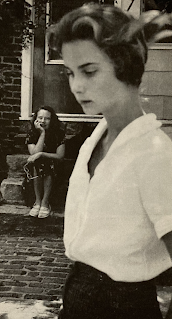
Grace Kelly in "The Swan"

How many pretty girls hope to become models and how many actually do?  Bonnie didn't walk the couture runway or transition into high fashion, but there has never not been a time since 1958 until she retired in 2020 that you wouldn't have seen Bonnie Trompeter somewhere. Her pretty good looks have never changed. She's instantly recognizable, first as the wholesome girl-next-door and then the lovely woman-next-door.Bonnie worked during college as well, traveling by bus to New York City or going off to assignments in Europe. It was, as can be imagined, not easy, and she left Middlebury after two years. While there she briefly dated a young man named Norm Lowe (remember that name).

A too young Bonnie for this ad

She was, though, swept off her feet by a young man she had met at a party. She was impressed by what she thought was a glamorous lifestyle as well as the two dozen red roses he brought to the hospital when she had her wisdom teeth removed. At the tender age of 19 she married Chuck Miller in a wedding also reported and photographed by Life magazine. Bonnie doesn't remember how the second Life story came about, but the photographer was Henri Dauman (remember that name also).

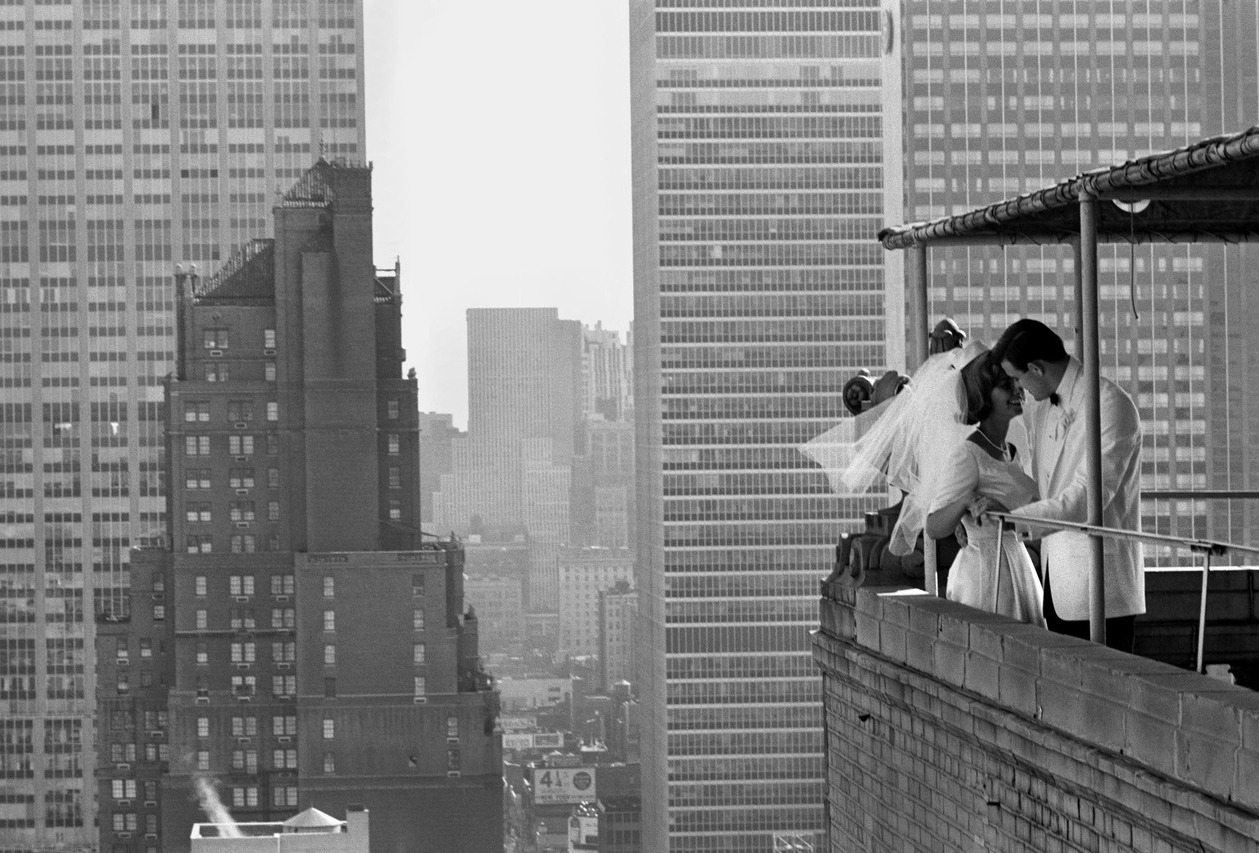
The couple lived in New York City, but the glamorous lifestyle was a myth. Bonnie continued her modeling career and gave birth to daughter Christa in 1964. By Christa's first birthday the marriage was over. Mother and daughter sometimes worked together—see Ivory Snow ad below—but it was thought Christa didn't look enough like Bonnie to be her daughter! Not only did Christa continue to have her own modeling career, she is the actress Christa Miller you probably know from many tv series— "The Drew Carey Show", "Scrubs", "Cougar Town", even "Seinfeld".

Mother and daughter
Christa Miller

Bonnie married a second time to a doctor, ten years older. They were together fifteen years and had a son, but her husband was a controlling alcoholic who insisted she keep working yet co-opted her income. And there was real tragedy: their 15-month-old baby girl was killed in a freak car mishap in their driveway.

Left to to support herself and her family after the divorce, Bonnie credits the catalog companies—Montgomery Ward, JC Penney and Spiegel— for keeping her in steady employ. She also helped herself by helping others and became an alcohol addiction rehabilitation counselor for 12 years at the Freedom Institute. 

Not here but Bonnie often was there

A brief third marriage to a photographer was also not a success.

As I talked to Bonnie the word "luck" kept coming up. But I couldn't help marvel at her resilience and ability to reflect with such clarity and understanding. She credits studies with inspirational Episcopalian monk and therapist Stephen Paul for spiritual healing and guidance and yoga master Rodney Lee for her interest and following of yoga. It's a tribute to a graceful and forgiving nature that she's accepted, learned and grown throughout her life.
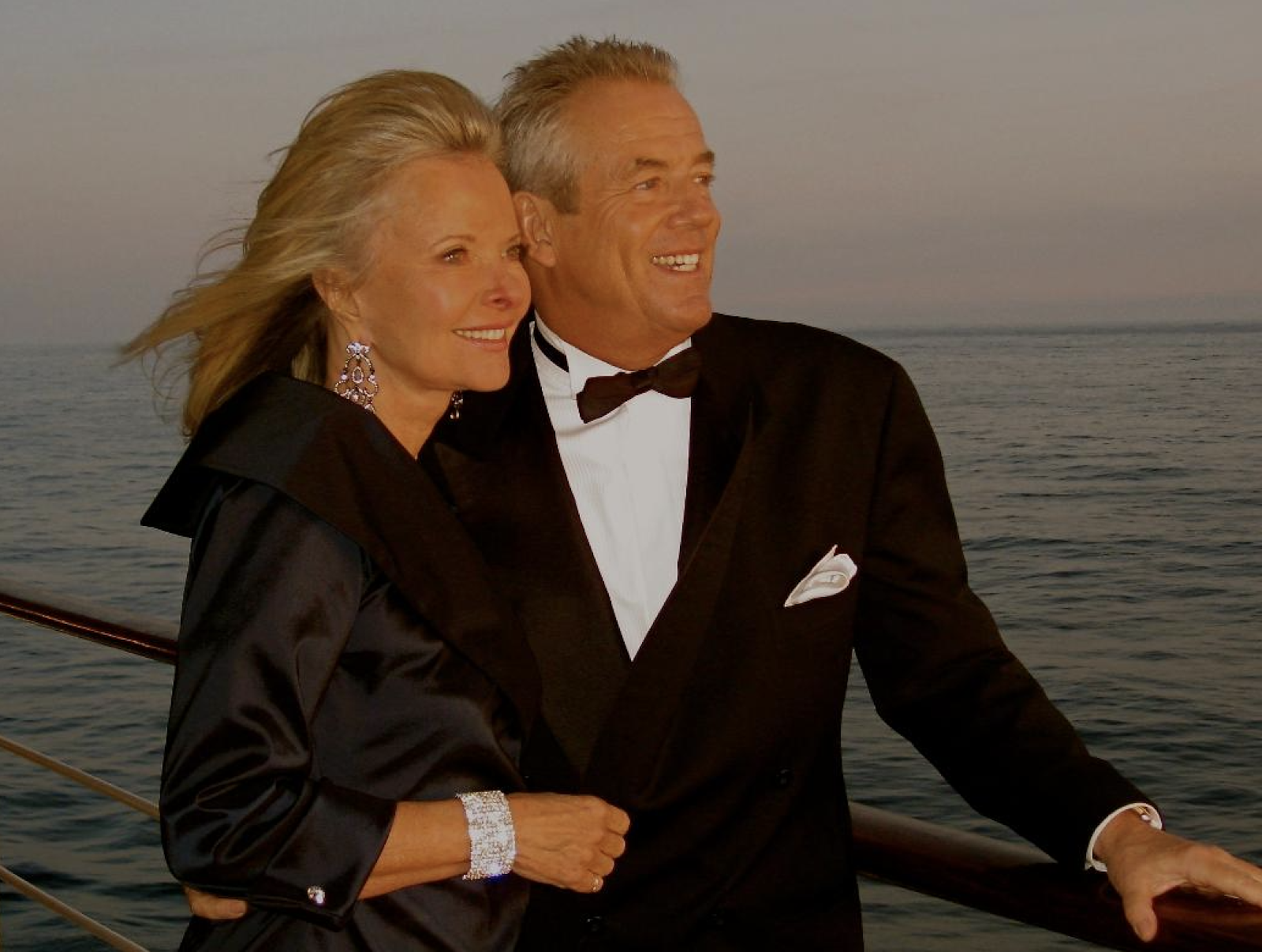
Still modeling in 2008

Here comes perhaps the happy ending or, better, the happy new beginning. Urged by a friend to attend their 25th college reunion at Middlebury, she balked at going because she had never graduated. But she went, as did Norm Lowe, the boy she "didn't appreciate at the time." They reconnected, as only former sweethearts can. He divorced, and they married in 1993.

Bonnie and Norm in 2021

Norm retired from sales in the semi-conductor industry in 2004. The couple have bi-coastal families with 9 grandchildren between them. Although they've lived in Sherman, CT, and all three of the Hamptons on Long Island, home is now a restored 1840's house in Camden, Maine. Another later-in-life discovery is a talent for watercolors that she never thought she had. Certain she "couldn't even draw a stick figure", she took classes anyways. She's a lovely painter. 

Bonnie's bunny

I think we all wonder about a model's personal style. Bonnie describes hers as preppy, favoring J Crew jeans with a polo or button-down. If Ralph Lauren is reading this, he needs to cast Bonnie in one of his iconic "Americana" ads as she so embodies the rangy, All-American woman he likes to dress. Like many of us these days she prefers to have arms and legs covered, though she'll be more "local" on holiday in Spain where women often prefer dresses. 

And who can resist asking a model for her beauty secrets? Bonnie's are deceptively simple. She's never even had a facial, but if she doesn't wear a bit of eyeliner and mascara she feels she looks half asleep. She's always had highlights in her hair but now has gone all-natural. Although she's always exercised, Bonnie discovered Pilates three years ago and swears by it. "It's changed everything, even the way I walk." And Bonnie and Norm enjoy Pilates and painting together.

Bonnie's granddaughter Charlotte Lawrence (Christa's daughter) deserves a mention as she is not only carrying on the modeling tradition, she is a noted young singer-songwriter and proof that there really is something to heredity.



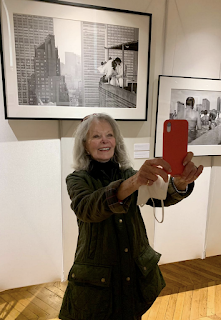
Remember that photographer Henri Dauman? On a trip to Paris in 2015 they unexpectedly came across a retrospective of his work at the Palais d’IĆ©na. A pix from that wedding shoot for Life was in very good company.
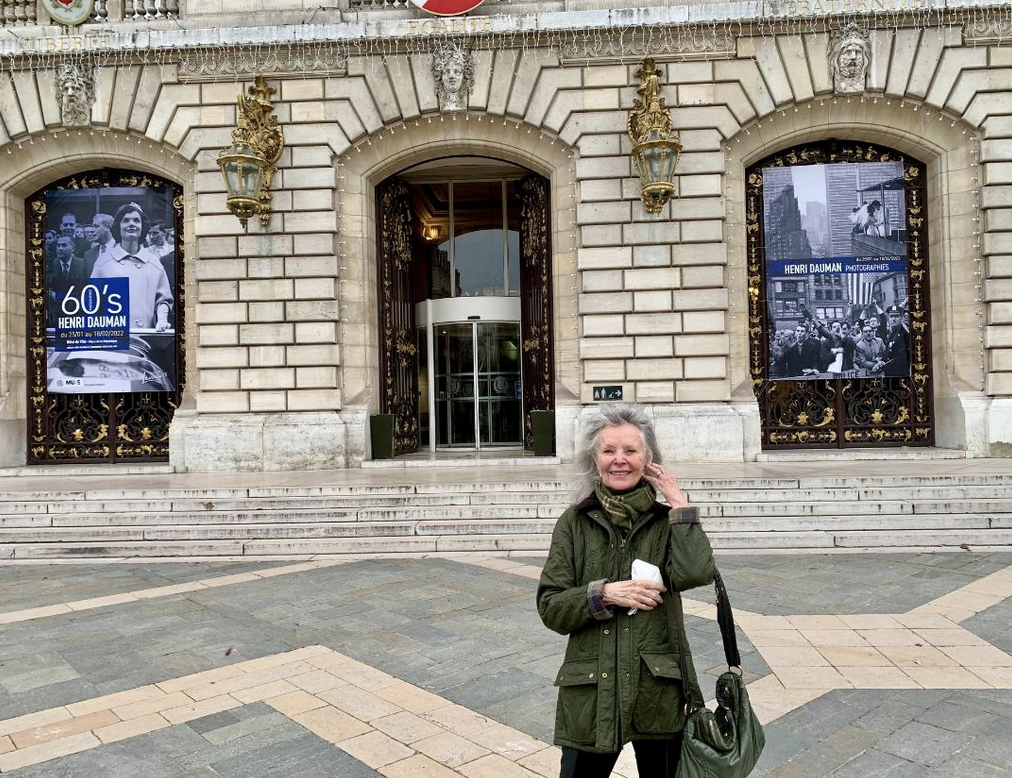

When I interviewed Bonnie she was about to fly to Europe, where she and Norm would be spending much of the summer at their home in Spain, very far from where I first met her in Uniontown, Pennsylvania.


Sunday, August 21, 2022

Will It be a Special Delivery?


You won't find me hanging around my mailbox waiting for the mail to deliver those September issues. Sure, I'll weigh them and count their pages to judge the health of my former profession, but I'm not expecting to be bowled over by anything I see.

The other day, after catching up on our families and giving up trying to save the world, a good friend and I agreed Fashion isn't exciting us these days, but we still like to shop. We were lunching at Mariposa in Neiman Marcus, if that gives you any idea. We want to be surprised, nay, brought to our knees by the thrill of finding what A) we'd always been searching for or B) something we never knew we wanted. That's not a bad place to be.

Vogue's pick of the 2022 fall trends. No comment
 
We both agreed that in fashion today nothing is new, and "retro" means styles from the early 2000s that we still have. We can "shop our closets", which could be liberating and kind of fun. This also means, instead of aimlessly buying the new for no other reason, when we are truly gobsmacked, we won't hesitate.

My personal attitude towards thrifting has changed as well. There are more offerings of the gently worn and the "it didn't work for me so maybe it will work for you." "Thrift shop" has become "resale", better curated, better presented and sharing real estate with premium retail.

As always, the first step in creating a workable wardrobe is weeding the garden of delights that is your closet. Get rid of what doesn't fit, you've never liked or is plain worn out.

A gal can dream...

So I'm stoked for fall, but in a way I haven't been before. The September issues are not going to tell me what I can and can't wear. They haven't done that for years. But I hope someone will bring back that patchwork-satin, lightweight-down cocoon coat I should have bought in 2002.


Tuesday, August 2, 2022

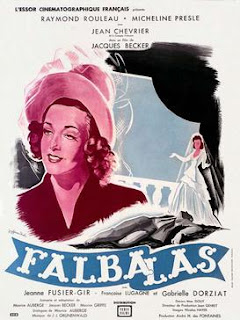
Stylish Cinema: "Falbalas" (Paris Frills)


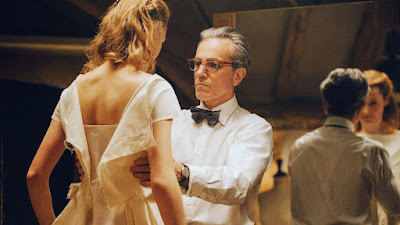
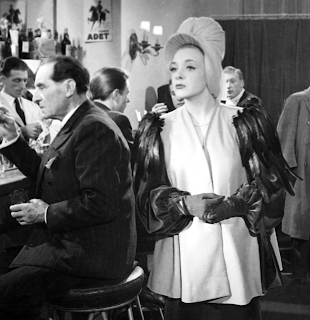
You could have knocked me over with a feather (reference is relevant) as "Falbalas" is a fashion film I had never heard of, let alone seen. It's a noir-ish French drama from 1945 about a successful couturier and his doomed romance. There is definitely a connection with this and 2017's "Phantom Thread", a fact celebrated by TCM's pairing the two as part of their "Follow the Thread" series.

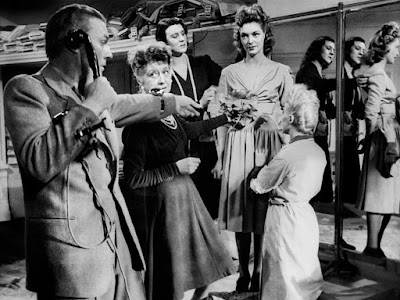
Phillipe creating while making a phone conquest

"Falabalas" is fascinating on many levels, notwithstanding how the title translates to "Paris Frills". Released in 1945, there is a calendar on set that says "1943". It hadn't occurred to me that Paris, squarely under the Nazi regime, was not only producing films but lavish couture as well. I do know the story, told well in the book "Miss Dior" and other sources, how important it was for the French to have the couture houses stay open. Chanel closed hers but many others tried to keep going for their thousands of (mostly women) employees. 

"Phantom Thread"

In "Falbalas" the successful designer, Phillipe Clarence, is in the midst of preparing his new line and not happy with what he's created. He blames the failure of one dress on his fabric supplier and seeks him out to complain. We already know Phillipe is a cold Don Juan, but he falls for the supplier's pretty young fiancee, a striking Micheline Presle, who has wider set eyes than Jackie Kennedy and is still alive today at age 99. Phillipe toys with Micheline (her name in the script as well), drops her, changes his mind, is rebuffed (though saintly Micheline decides she can't marry the other man either), goes mad and kills himself. 

Micheline as Micheline

Okay, I gave away the plot, but the movie begins with Phillipe dead after jumping from a window, landing on a mannequin wearing Micheline's scorned wedding gown. One of the passersby remarks it was lucky the mannequin didn't break. 

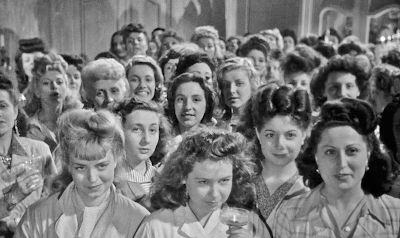
The "girls" of the couture house

As did "Phantom Thread", "Falbalas" accurately portrays life in a couture house—the personalities who run the place, including a stern but sympathetic vendeuse, and the many young women whose fingers do the sewing. The fashions were designed by Marcel Rochas, who opened his own couture house at age 23 in 1925 and designed until his death in 1955. The brand continues to this day. Rochas' style was perhaps the polar opposite of Chanel's. He believed in femininity and thus possibly the "frills" of the title. His costumes for the film are perhaps a little over the top, as costumes may be, but still have a wearable flair.

Rooster? Crow? Buzzard???

One of the early pieces we see is an outfit designed as a surprise for Micheline. Make-do was de rigueur; some poor barnyard animal contributed to those shoulders. The hats, which were huge as was the style, were designed by someone else (and never seem to match the clothes). The shoes were clunky as they were wood or cork, the leather being shipped off to make boots for German soldiers. As a subplot the fabric supplier is in the midst of renovating a grand apartment for his bride-to-be. Where did this luxurious space come from in Nazi-occupied Paris?

There is not a Nazi or a mention of WWII in the film. It's fashion after all, and fantasy is a big part of fashion. Its two universal themes are women love to look beautiful and love makes the world go round.

This little treasure seems available to watch on Apple tv with a 1:32 minutes trailer available on YouTube. Enjoy.


Sunday, July 3, 2022

Some Funny Stuff About "Funny Face"


Turner Classic Movies screened 1957's "Funny Face" last night as part of its "Follow the Thread" study of fashion and movies. I've probably seen "Funny Face" more than any other film, but it's been a long time.

I'm happy (and more than a little relieved) to report not only does "Funny Face" remain charming and 100% watchable, it's such a tribute to everything that magazines were and in my opinion should be—informational, aspirational but still a bit fantastic, like a beautiful dream.

The opening credits, designed by photographer Richard Avedon, show off the high fashion style favored by Harper's Bazaar and Vogue. At the time he worked exclusively for Harper's Bazaar. Carmel Snow was Editor in Chief, though she left the next year. The last frames of the opening sequence thank Snow and Avedon for their contributions.
 
The movie revolves around a fictional magazine called Quality. It's mentioned in the same breath as Vogue and Bazaar, as if they were a trio. It's often said that Maggie Prescott, the editor-in-chief character, was based on Diana Vreeland. No doubt Kay Thompson styled some of her mannerisms on Diana, who was not editor-in-chief of anything then. She was Harper's Bazaar's fashion editor, working under Carmel Snow. They were very different women, but Carmel realized what Diana brought to fashion and let her do her thing (while attempting to rein her in when necessary).
 
Avedon (left) and Astaire

The photographer of the story, Dick Avery, played by Fred Astaire, is most definitely meant to be Richard Avedon. Not too far a stretch there, eh? They were similar in build, although Astaire was 58 at the time and Avedon 34. Something to be said for a life in dance! Another similarity of reel life to real life is the character of Quality's art director. He doesn't have much of a role, but he does have a marked European accent. Bazaar's brilliant art director under Carmel Snow was emigrĆ© Alexey Brodovitch. He left when she left. 


Many real top models of the era appear in the film. Dovima, a supermodel before the term was coined, is the only one with lines. She is a gorgeous creature posing for Astaire's photographer but more worried about picking up her Harold's laundry. She was obviously dubbed in wincingly painful Brooklynese so must have been a very good sport.

Carmel (left) with Diana

Carmel was forced out of Bazaar in 1958 at age 70. She did not suggest Diana for the top spot, and the job went to Carmel's niece, Nancy White. It's also been said that's why Diana Vreeland left Bazaar for Vogue That didn't actually happen until 1962, so Diana worked under Nancy for 5 years.


The opening number of "Funny Face" is "Think Pink", encouraging Quality's readers to wear nothing but.
As EIC of Vogue, several years later Diana Vreeland once sent a memo to her editors, "Today let's think pig white! Wouldn't it be wonderful to have stockings that were pig white! The color of baby pigs, not quite white and not quite pink!" How bizarre is that? Especially since, as the story goes, Diana saw "Funny Face" once and said, "This will never be spoken of again."

Another thing that tickled me pink? When questioned why she herself is not wearing pink, Kay Thompson's Maggie Prescott says, "I wouldn't be caught dead." Nevertheless a few scenes later she's wearing, you guessed it.


Sunday, June 26, 2022

Ahoy! Here Comes Coastal Grandmother


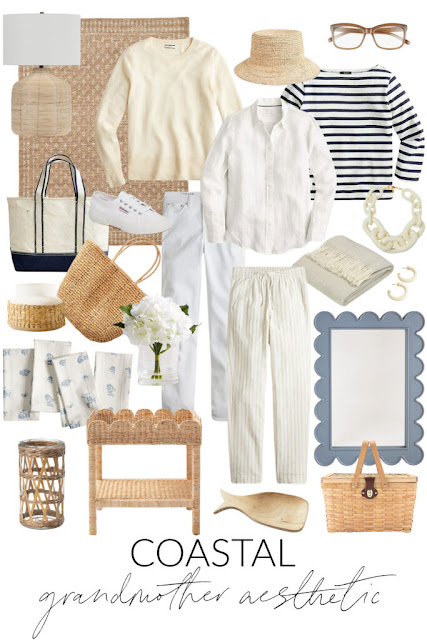
I will confess to being a little leery about this. I usually hate when someone tries to pin one down and stick a label on you. That seems to defy all the reasons for seeking personal style. Although in reality the Coastal Grandmother aesthetic celebrates preppy and requires money to pull off, it's also a lovely tribute to the power and beauty of women growing older. I'll take it. We've still got it, and now you want it too.


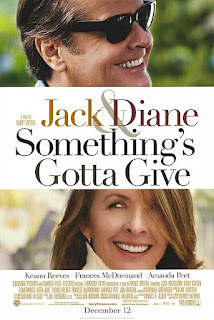
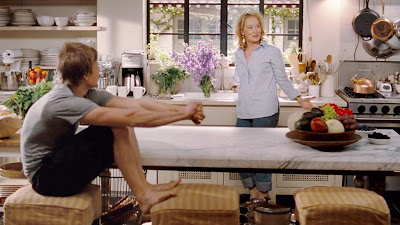
Diane Keaton and her many appearances in Nancy Meyers' films make her literally the poster child for Coastal Grandmother. She personifies the woman of a certain age who is put together (but not too tightly). She's accomplished, yet her accomplishments must be in the past because she has a lot of time for reading, gardening, cooking and reflecting. There may be romance but it's not a raison d'etre. NB in her personal life Keaton's style is far more quirky and harder to achieve.

Blythe

Meryl

Oprah

Martha

Sarah (center)

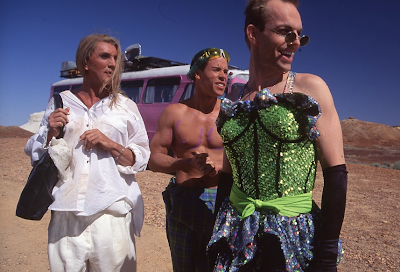
The list is long. Think Blythe Danner in "I'll See You in my Dreams", Meryl Streep in "It's Complicated", Oprah Winfrey and Martha Stewart as Oprah and Martha.  Sarah Baumler of HGTV's "Renovation Island" is Coastal Grandmother-in-training. Terrence Stamp as Bernadette in 1994's "Priscilla Queen of the Desert" may have been Coastal Grandmother #1. 

Bernadette (but w/o the black bag)

CG's decorating style is as livable as her wardrobe—natural fibers and a bleached, beachy color palette. I bet her candles are unscented. Nature makes its way inside. She has a garden bountiful enough to harvest, plus she knows her way to a good farmer's market. She has visitors but no one just drops in, thus she can entertain with aplomb. She reads voraciously and is always listening to an eclectic playlist. 


Pulling off Coastal Grandmother may be a little harder if you do not possess the freedom of a retiree with a good 401k, but I love love love that it celebrates a stage of life to be embraced. Emulate away, ladies! I know I will, though I will add "Bohemian" in front of Coastal and my coast would be a rocky one in the south of Italy, if I had my way. 

Credit: Life on Virginia Street


Wednesday, June 1, 2022

One Pix Says it All


No, really, I mean it.

This does say it all.

Will that stop any of us who love a bargain?

Probably not, but 100% is a GOAL!


Thursday, May 12, 2022

So Where Have They Gone?


Yesterday's New York Times ran a piece by Alexandra Jacobs asking, Where have the magazines gone? I could have written the first two paragraphs myself:

I miss magazines. It’s a strange ache, because they are still sort of with us: staring out from the racks at supermarket checkout lines; fanned wanly around the table in hotel lobbies; showing up in your mailbox long after the subscription was canceled, like an ex who refuses to accept the breakup.

But they’re also disappearing. This accelerating erosion has not been big news during a time of pandemic, war and actual erosion, and yet the absence of magazines authoritatively documenting such events, or distracting from them, as they used to do with measured regularity, is keenly felt.


So sad, so true... Reading the story made me feel worse, lessened slightly by knowing someone else feels the pain. I've loved magazines as long as I can remember, way before they ever became my work. 

The world came in the door via Life magazine. 

I would carefully read my much older sister's copies of Seventeen when she was out of the house. She was 16; I was 7. 

A few years later I impatiently waited for THE DAY Glamour appeared on the rack at the drugstore (as noted in every issue) and plunk down my 35 cents for it, never becoming a subscriber lest it be delivered even one day later.

I can't remember much about the kids, but I loved reading the New Yorker when I babysat for the family down the street, east coast transplants obviously missing civilization.

One summer I took the ferry to Boston from my job in Provincetown, specifically to buy a copy of the latest Vogue Knitting. I had to beg for a room at the YWCA as I hadn't brought enough money to spend the night. 

Occasionally I bought a copy of French Elle at the foreign newsstand in downtown Cleveland, way before Elle had an American presence. It was $5, equal to almost $50 today. 

Faithful readers of the blog will recognize these stories. Reading Jacobs' piece churned them up in a wellspring of soggy memory.

Then came 38 years of my life in magazines. I could count on one hand the days I didn't want to go to work, and those were probably weather-related. I left in 2003, before the party ended, sorry to go but in retrospect happy to have missed the dimming of the lights.

My last fifteen—and possibly best—years were at Woman's Day. It was a sisterhood (with a few empathetic men) of many ages and backgrounds, all creating something we believed in. Money was never the sole reason to work in magazines. There were other rewards—personal accomplishment, lifetime friendships, free beauty and fashion advice, books on the giveaway table, always someone with an ear for a problem or to weigh in on an idea.


Back then one couldn't walk down a street in midtown Manhattan without running into a magazine stand. New magazines came out right and left. For a while I bought the premier copies. Anyone want a first edition of People, Mia Farrow on the cover?

How many are still publishing?

The magazines I still subscribe to are getting so thin they could probably skip the mailbox and slip through the crack in the door. I won't go into whether magazines are relevant or not. Of course they are no longer timely, not with instant everything on the device you are using to read this. Magazines always had a point of view; that's why you read the ones you did. Now being opinionated has ramifications. Yes, there's so much "we" (and I use that as someone guilty by association) could have done better in terms of equality and diversity. Naivety is not a very good excuse.

If magazines disappear, what will the writers of ransom notes do? What will become of mood boards? Magazine holders? The pandemic has already cleared periodicals from doctors' offices. Whatever the reasons for their demise, be it momentary or permanent, they will forever be a part of me. 

A good sign, available on Amazon


Friday, April 22, 2022

Stylish Read: "Chanel's Riviera"


Surprise! I thought "Chanel's Riviera" would be a dishy romp through the crazy lives of entitled aristos and bohemian writers and artists playing and living along the Riviera from 1930-1950. Coco Chanel, a creative genius and eagle-eyed businesswoman, catered to this crowd and counted them as friends. She had opened a ready-to-wear boutique in Biarritz in 1915 and built, "La Pausa", the only home she ever owned, in Roquebrune in 1929. While in Paris Chanel always lived in apartments and at the Hotel Ritz.

Chanel's "getaway", La Pausa

"Chanel's Riviera" is so much more. I've never been much of a Chanel fan. Aside from being a revolutionary designer, she became a difficult and seemingly bitter old woman. Don't expect a full-on immersion into Chanel here. She comes off better than I expected and may even have tried to arrange peace talks between the Allies and Germany!     

Serious fun at La Pausa (Chanel on right)

"Miss Dior", another Stylish Read, looks into the life of Christian Dior's sister Catherine, her time in the French resistance and imprisonment in a German concentration camp. "Chanel's Riviera" delves deeper with de Courcy's
well-researched study of France during WWII. This is a subject that has been neglected, certainly by the French, possibly with good reason. There is no easy distinction between being a collaborator and doing what it takes to survive. France has struggled with that and is only now coming to terms with it.

I can see how "Chanel's Riviera" leads the way to further reading about many of these interesting characters— the long-forgotten like socialite Maxine Elliott and the ever-popular such as the Duke and Duchess of Windsor. What remains foremost, however, is history that may be fading over time but should never be forgotten.